
Table of Contents
Introduction – Trick or Treat
Dreams are messages that the mind sends us to alert us about our feelings, desires, and even our life experiences. One type of dream that sparks particular curiosity is the one related to festive situations, such as Halloween, when children dress up as ghosts, witches, and other figures from the imagination, going door-to-door asking for “trick or treat.” Dreaming about this type of game can carry deep meanings, both emotionally and symbolically. In the realms of psychoanalysis and holistic therapies, such dreams are analyzed from various perspectives, revealing everything from the search for pleasure to the need to confront fears or unmet expectations.
In this article, we will explore what it means to dream about “trick or treat,” considering both traditional symbolism and modern interpretations that involve self-awareness and psychic dynamics. Understanding these dreams can provide insights into how we handle our emotions, how we interpret power and exchange games in our lives, and even how safety and fun influence our everyday experiences. Through this analysis, we can discover how childhood games can translate into valuable lessons for our emotional growth.
Throughout this article, we will examine what this type of dream may symbolize according to Jungian psychoanalysis and holistic therapies, with the help of tarot and astrology. To enrich the understanding of this dream phenomenon, we will also include a correlation table detailing how different elements of this dream may vary depending on the feelings involved.
Chapter 1: The Symbolism of “Trick or Treat”
The “trick or treat” game has its roots in Halloween, a tradition that blends the playful with the mysterious. This concept of choosing between “treats,” which represent rewards and pleasure, and “tricks,” which can symbolize punishment or provocation, carries a dual symbolism rich in meaning. When this type of dream appears, it may reflect how the dreamer is dealing with choices in their life — especially those involving pleasure versus discipline, reward versus challenge.
In the context of Jungian psychoanalysis, the dream can be interpreted as a reflection of the individuation process, where the unconscious attempts to integrate contrasting aspects of the personality. The “treats” could represent desires and pleasures of life, while the “tricks” symbolize internal conflicts, impulsive actions, or the consequences of ill-thought-out decisions. This dream may suggest that the dreamer is in a phase of seeking balance between these two aspects of their psyche: immediate pleasure and the consequences of their choices.
Additionally, this duality may be linked to a time in their life when they must make difficult decisions or face a situation where reward and punishment are at play. It may also be a metaphor for the balance between what is perceived as “good” and “bad” in the situations they experience, representing the dilemma of making pleasurable choices that may bring negative consequences or facing difficulties in search of a greater good.
Chapter 2: The Symbolism of Children and Play
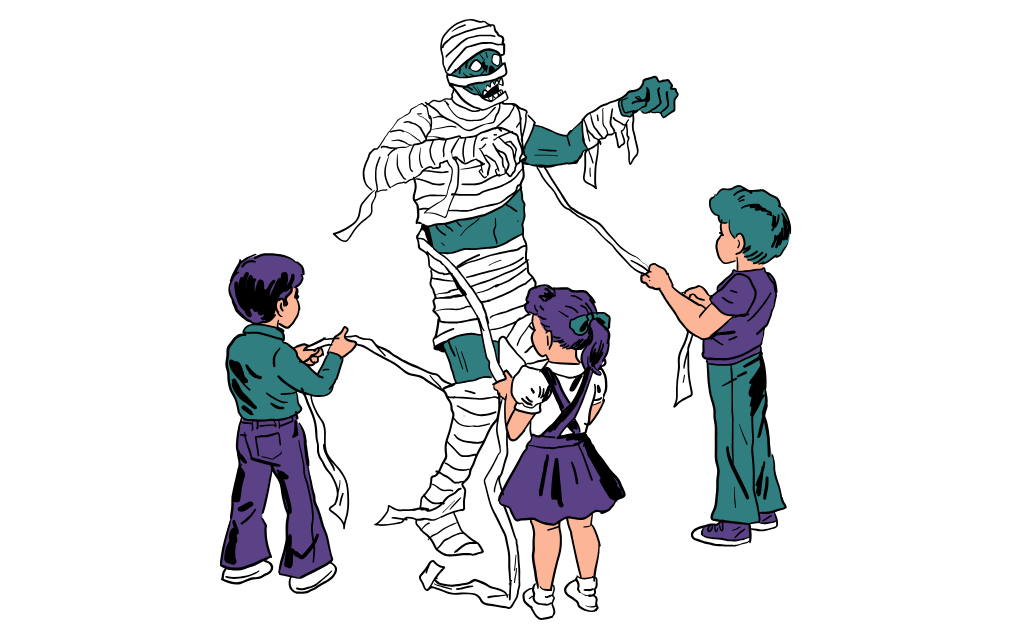
Dreaming of children playing “trick or treat” can carry even deeper symbolism, especially when we think of the figure of a child as an archetype. In psychoanalysis, the child represents both the vulnerable part of the psyche and the untapped creative potential. Thus, this type of dream may indicate a return to the past, a desire to relive moments of innocence, or, on the other hand, a warning about the need to rescue this inner purity, which may have been lost over time.
Furthermore, the children asking for “trick or treat” may symbolize parts of ourselves seeking recognition, affection, or even reward for past actions. This dream could be interpreted as a call to give more space to fun, lightness, and spontaneity in life. On a deeper level, it may reflect an emotional need, indicating that the dreamer is seeking something that makes them feel pleasure or satisfaction, whether in the form of affection or social recognition.
On the other hand, the dream may also take on a warning tone if the dreamer perceives that the “trick” aspect is gaining prominence. This could represent internal tension, as if the dreamer were giving in to impulsive behaviors or “tricks” from the unconscious, as a way of challenging norms or expectations. The challenge, in this case, may be a representation of the fears or unresolved issues that need to be confronted for emotional balance to be achieved.
Chapter 3: The Role of Fear and Fun in the Unconscious
The idea of “tricks” in the dream may indicate the presence of a fear or a perceived threat, even if unconsciously. This type of symbolism aligns with Jung’s archetypes of the shadow, which describe the part of the psyche that we reject or repress. The “tricks” could be a manifestation of these dark or unwanted aspects, which are often projected externally through behaviors or events in our lives that force us to face our fears and limitations.
At the same time, the element of play and fun is also present. The “treats” are not only associated with reward but also with pleasure, joy, and gratification. Dreaming of this dynamic may represent a desire for balance between the two sides of life — challenges and rewards. The unconscious, by projecting these playful dynamics, suggests that the dreamer needs to learn to integrate these contrasting aspects, not only as ways of living pleasure or suffering but as a natural and necessary cycle for personal and emotional growth.
Moreover, the dream may be an indication that the dreamer is in the process of learning to have fun with life’s challenges, finding ways to deal with the “tricks” (whether metaphorical or real) in a light-hearted manner and not allowing fear to dominate their actions. The presence of both fear and fun in the same dream may also suggest that the dreamer is being invited to reflect on how they deal with their own anxieties, recognizing that, no matter how uncomfortable they may be, they are an integral part of the growth process.
Correlation Table – Trick or Treat
| Dream Element | Possible Psychological Meaning | Relationship to Personal Growth |
|---|---|---|
| “Treats” | Desire for pleasure and gratification | Search for balance between pleasure and duty |
| “Tricks” | Fears or impulsive behaviors | Confrontation with the shadow and overcoming internal challenges |
| Children | Innocence, vulnerability, purity | Need to rescue lost aspects of childhood |
| Ghostly Costumes | Fear of the unknown or the future | Confronting unresolved fears |
| Asking for treats | Need for recognition and affection | Emotional and affectionate needs |
| Playing tricks | Impulsivity or rebellion | Dealing with the desire to break norms or limits |
| Parents or adults in dream | Influence of authoritative figures | Conflict with authority figures or external expectations |
| Festive Environment | Joy, celebration of life | Relearning to have fun and celebrate small moments |
| Darkness or fear | Unconscious shadows or emotional blockages | Overcoming fear and the need to face internal issues |
| Interactions with others | Interpersonal relationships and communication | Rescuing dialogue and harmony in personal relationships |
Conclusion
Dreaming about the game “trick or treat” is undoubtedly a unique opportunity to reflect on the duality between pleasure and consequence, fun and responsibility. This type of dream can act as a mirror, reflecting the deeper emotional and psychological dynamics of the dreamer. From the search for pleasure to confronting hidden fears, these dreams invite us to explore our emotions, our limits, and our expectations in a more conscious way.
Through Jungian psychoanalysis and holistic therapies, we can better understand how these symbols manifest in the unconscious and how we can integrate these experiences in a constructive manner. This type of dream reminds us that pleasure and fear are two sides of the same coin, and learning to balance them is essential for our personal and spiritual growth. Self-awareness, ultimately, is the key to transforming these dreams into tools for emotional evolution.

Trick or Treat

Prazer, eu sou a Catty, a mente criativa por trás do “Coragem para Sonhar”. Fascinada pelos mistérios dos sonhos, psicanálise, Tarot e da numerologia, sou uma exploradora incansável desses reinos encantados. Junte-se a mim nesta jornada única, onde a coragem além de sobrenome é portal para sonhar e encontrar sua expressão mais profunda na linguagem mágica do sonho e terapias holísticas.


